
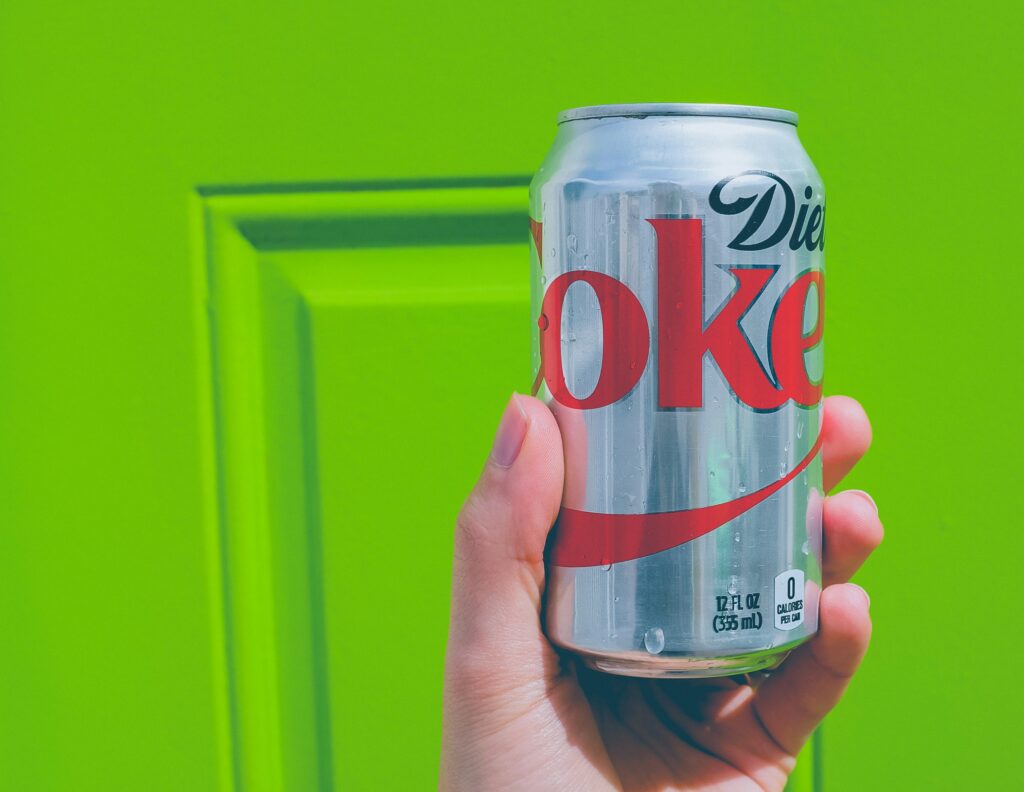
To demonstrate the power of GrowthTrack we recently ran a self-funded study of the UK diet/no sugar CSG category.
This included a base of 503 frequent (monthly) buyers of diet/no sugar CSG drinks, and included exploration of the six leading brands in this space:
- Diet Coke
- Coca Cola Zero Sugar
- Pepsi Max
- Sprite Zero Sugar
- Fanta Zero sugar
- Dr Pepper Zero
Coverage
To ensure comprehensive data capture we included the full suite of GrowthTrack measures, including:
- Demographics and buyer characteristics
- A deep dive on CSG drinking behaviours to establish category-level and
brand buyer behaviour dynamics - Mental Availability
- Category-level and brand CEPs
- Brand imagery
- A traditional brand loyalty metric
- Wider brand touchpoints
- A full ad diagnostics exploration of the recent Diet Coke Jamie Dornan TV ad
Advanced Analytics
As part of our analysis (and as is standard in the GrowthTrack model) we used advanced statistical modelling to provide a Key Drivers Analysis, thus allowing us to identify the factors most associated with driving brand sales. From this modelling, we then created a What-If Simulator tool, allowing us to game-play scenarios so that we could explore what combination of identified drivers would have the optimal impact on brand growth gains.
Headline Findings
Diet Coke and Coca Cola Zero Sugar have an almost identical profile. Their buyer dynamics are virtually the same, as are the distribution of Category Entry Points and consumer demographics. This suggests a level of inter-brand cannibalisation.
Pepsi Max just nudges ahead of the Coca Cola brands. It does better on retaining habitual drinkers, +8% points on Diet Coke. It also performs better on Category entry Points, earning an average 12 out 31. Higher than any other brand.
Diet Coke has headroom to grow market share. Through the creation of the What-If Simulator (built on the Key Drivers Analysis) we were able to game-play a range of marketing and branding scenarios for the Diet Coke brand. After running several permutations, we identified a group of 5 x levers that had the potential to drive up share of habitual drinkers by +5% points … taking back most of the ground from Pepsi Max.
Non-cola brands are competing each other as part of the following pack. All three non-cola brands have significantly weaker profiles. Of these, Sprite Zero Sugar does a little bit better with slightly more habitual drinkers. Dr Pepper Zero and Fanta Zero Sugar are much more vulnerable than all other brands, with much higher proportions of ‘Switch-outs’ – people that have drunk them in the past but didn’t choose them on the last occasion.
Brand choice is complex. In our key drivers modelling, we include 85 variables that had the potential to play a part in a consumer choosing diet Coke. Out of those, we identified that 21 different factors had some influence.
Absolute brand loyalty is a fallacy. By comparing Diet Coke’s traditional loyalty metric which included the statement, ‘It’s the only brand I’d ever drink’, we cross- analysed this sub-group with more specific consumption behaviours and found that 36% of these supposed Diet Coke loyalists had drunk a competitor brand on a recent or the last occasion.
Find out to make use of GrowthTrack – Advanced Brand Tracking for your Brand